
Why So Many Autistic People Love Board Games (And What the Research Says)
Research confirms what most game tables already know: autistic people are drawn to board games at a much higher rate, and the reasons matter for every family that plays.
Recent research confirms what many in the board gaming community have long suspected: autistic people are drawn to board games at a much higher rate than the general population, and the benefits they get from the hobby are profound. A 2025 study published in the Journal of Autism and Developmental Disorders is one of the most comprehensive looks at autism and board gaming ever conducted, and its findings are worth every gamer's attention.
But before we get into the data, let's talk about something you've probably seen at a game table.
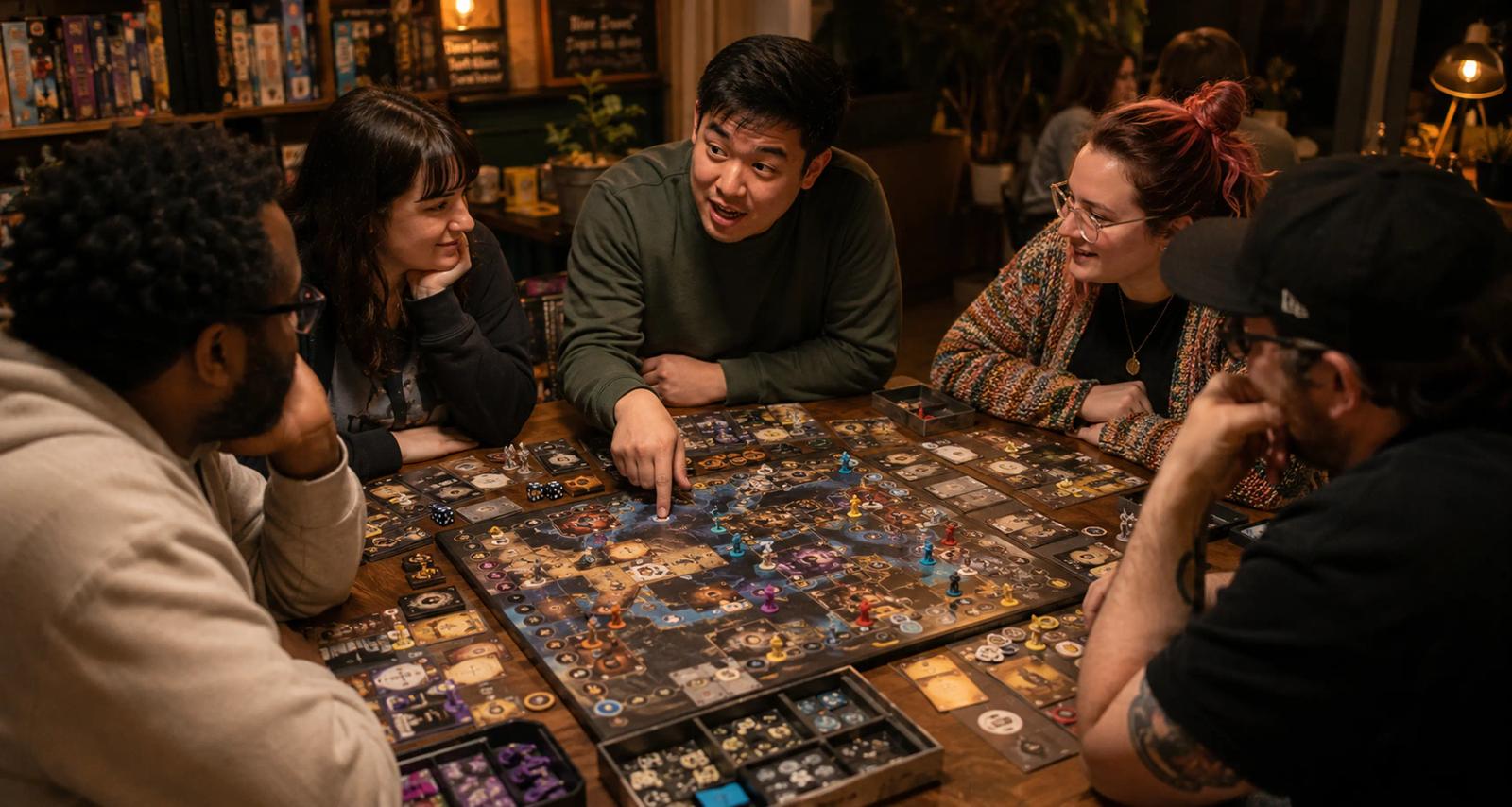
Someone who's been quiet all evening suddenly comes alive explaining why they played a card the way they did. Two strangers who couldn't figure out small talk are now deep in a debate about optimal strategy. A person who usually fades into the background is leading the group through a cooperative puzzle, and everyone's listening.
If you've spent any time around board games (really around them, not just Monopoly at Thanksgiving) you've probably seen this happen. Maybe you've been this person.
That moment is what Gotta Play Games is built around. The idea that games aren't just entertainment. They're a medium for connection. A structure that makes being with people easier, more natural, more real.
And now there's peer-reviewed science to back it up.
What the Research Found: Autistic People Are Overrepresented in Board Gaming
A team of researchers from the University of Plymouth and Edge Hill University published a paper titled "Game Changer: Exploring the Role of Board Games in the Lives of Autistic People" in the Journal of Autism and Developmental Disorders (Cross, Belshaw, Piovesan, & Atherton, 2025). It comprised three separate studies, including a survey of over 1,600 board gamers, in-depth interviews with 13 autistic hobbyist gamers, and focus groups with 28 autistic adults who were new to the hobby.
Here is what they found:
4.7% of board gamers in the study had a clinical autism diagnosis, compared to roughly 1% in the general population. That is nearly five times the expected rate.
6.7% of board gamers scored above the clinical cutoff on the Autism Quotient (AQ), a standard measure of autistic traits, suggesting even more players may be autistic without a formal diagnosis.
29.1% of all board gamers scored in the Broad Autism Phenotype range (elevated but subclinical autistic traits), compared to 15.4% among science students and 8.3% among non-science students in general population studies.
When clinical diagnoses and high AQ scores are combined, approximately 1 in 10 hobbyist board gamers shows significant autistic traits.
In other words: the board gaming table has always been a neurodivergent-friendly space. It just didn't have the research to say so out loud.
Why Autistic People Are Drawn to Board Games
The researchers didn't just count who was playing. They dug into why autistic people are drawn to games, and what they get out of them. Through interviews and focus groups, four themes emerged consistently.
1. The Rules and Structure of Board Games Feel Safe and Stimulating
Board games have rules. Clear, consistent, learnable rules that apply equally to everyone at the table. For many autistic players, this is genuinely relieving. There's no ambiguity about what's expected. You don't have to worry about unspoken social codes you might have missed. The structure of the game (whether it's a cooperative game like Hanabi, a social deduction game like Codenames or Werewolf, or a strategy game) creates a safe container for the interaction.
One participant in the study described it this way: "You can safely interact in this environment without having to worry about something unexpected popping out."
That's not a small thing. That's the difference between wanting to be in a room and dreading it.
This aligns with what researchers call the "systemising theory" of autism, the well-documented tendency for autistic people to find deep satisfaction in understanding and working within rule-based systems. Board games are, at their core, elegant systems to be mastered.
2. Board Games Connect People Through Shared Passions and Special Interests
When you find other people who love the same things you love, something unlocks. Conversations that felt forced become effortless. You're not trying to manufacture common ground. It's already there, sitting on the table between you.
For autistic people, who often have deep and specific interests and can feel self-conscious about the intensity of those interests, the board gaming community offers a rare kind of permission. Being passionate and knowledgeable isn't unusual here. It's respected. It's the whole point.
Games like Dixit reward imaginative thinking. Games built around animals, history, trains, or science fiction (themes that commonly overlap with autistic special interests) give players a way to engage their existing expertise and enthusiasm. Several participants in the study described board gaming as a "passion" in the clinical sense: an intense, absorbing interest that brought them genuine flow states and relief from everyday stress.
Many participants also described the escapism of board gaming. One described it as "an island of calm." Another said games gave them permission to switch their brain off from the pressure of just being themselves.
3. Board Games Act as a Social Lubricant for Autistic Players
This is perhaps the most significant finding of the research. Across both seasoned gamers and first-timers, participants kept returning to the same idea: board games make socializing easier because they give everyone something to focus on besides each other.
Small talk is hard. Eye contact is hard. Knowing when to speak, when to listen, how to transition between topics. All of it is genuinely difficult for many autistic people. But when there's a game in front of you, the game provides all of that scaffolding naturally. You talk because the game gives you something to talk about. You engage because the rules tell you it's your turn.
One participant said board gaming was "probably my primary method of making friends."
Several others noted that they had stopped playing video games specifically because board games gave them the same strategic depth and replayability, but also gave them people. Real human connection that solo gaming couldn't offer.
The research also found that autistic players felt genuinely appreciated within mixed autistic and non-autistic gaming groups, often for traits like being the first to learn the rules, being the most organized about scheduling sessions, or being the most focused and level-headed during play.
4. Even Challenging Game Mechanics Encourage Growth
Social deduction games (Werewolf, Spyfall, Deception: Murder in Hong Kong) were interesting territory for the researchers. Autistic people are often assumed to struggle with bluffing and deception, and many participants confirmed that playing as the "traitor" was genuinely difficult. Body language was hard to control. Lying under pressure felt unnatural.
But here's what the study found: they played anyway. And many found it valuable, as a low-stakes space to practice reading people, to observe verbal and non-verbal cues, to try on a perspective they didn't naturally occupy. Games, in this sense, are a training ground as much as an entertainment medium.
What This Means for the Board Gaming Community
The study's findings have real implications for how we think about game design, game nights, and gaming communities.
Autistic players favor mechanics like engine building, hand management, tile placement, and set collection, and rate social deduction and hidden information mechanics lower on average. They are more likely to play online, more likely to play solo, and more motivated by strategizing than by social interaction, though paradoxically, many described the social dimension of board gaming as one of its most important benefits.
This isn't a contradiction. It suggests that autistic players may want social connection just as much as anyone else. They just need a different structure to access it comfortably. Board games provide exactly that structure.
What This Means for Us at Gotta Play Games
At Gotta Play Games, we make card and board games for people who love to gather around a table. That's the whole mission, right there in our tagline: Gather up. Game on.
Reading this research, something clicked into place.
The table we're building around isn't just for one kind of person. It never was. The people who have always been most drawn to games (who memorize rulebooks, who care deeply about mechanics, who find more ease in structured play than in unstructured socializing) deserve games designed with intention. Games that reward deep engagement and systematic thinking. Games that make it easier, not harder, to be in a room with other people.
We're a small indie company. We're still figuring a lot of things out. But we know what kind of table we want to set. One where there's always room for the person who needs the rules explained carefully before they feel safe, and who then becomes the one teaching everyone else. One where being really, genuinely into the game isn't a personality flaw. It's the whole reason we're here.
If that sounds like your kind of table, we'd love to have you.
Frequently Asked Questions
Are autistic people more likely to enjoy board games? Research suggests yes. A 2025 peer-reviewed study found that autistic people are nearly five times more represented in the hobbyist board gaming community than in the general population, with approximately 1 in 10 board gamers showing significant autistic traits.
Why do autistic people like board games? The research points to four main reasons: the clear rules and structure reduce social anxiety, games provide a shared passion that makes conversation easier, the game itself acts as a social lubricant by giving players something to focus on besides each other, and game mechanics offer a safe space to practice social and cognitive skills.
What types of board games do autistic players tend to prefer? The study found autistic players tend to favor cooperative games, solo play options, and mechanics like engine building, hand management, tile placement, and set collection. They generally rate party games and social deduction mechanics lower on average, though many still enjoy and value those game types.
Can board games help autistic people socially? The research suggests they can. Both experienced autistic gamers and those new to the hobby described board games as making socializing significantly easier, reducing the pressure of small talk, providing natural conversation topics, and helping forge genuine friendships over time.
What board games are good for autistic players? The study used games including Codenames, Hanabi, Dixit, Werewolf, Spyfall, and Deception: Murder in Hong Kong in its focus groups. Cooperative games and games with clear, learnable rules tend to be particularly well-suited to autistic players, though preferences vary widely across individuals.
Source: Cross, L., Belshaw, F., Piovesan, A., & Atherton, G. (2025). Game Changer: Exploring the Role of Board Games in the Lives of Autistic People. Journal of Autism and Developmental Disorders, 55, 3478-3497.